Friday, 23 September 2016

August expedition

Many of the group were away, so a small number came on the August walk. We started by putting up new stickers along the canal path to indicate our collaboration with both Waterways Ireland and the National Biodiversity Data Centre. We followed this with a scent test and the consensus correctly identified a small plant with yellow florets as pineapple weed.

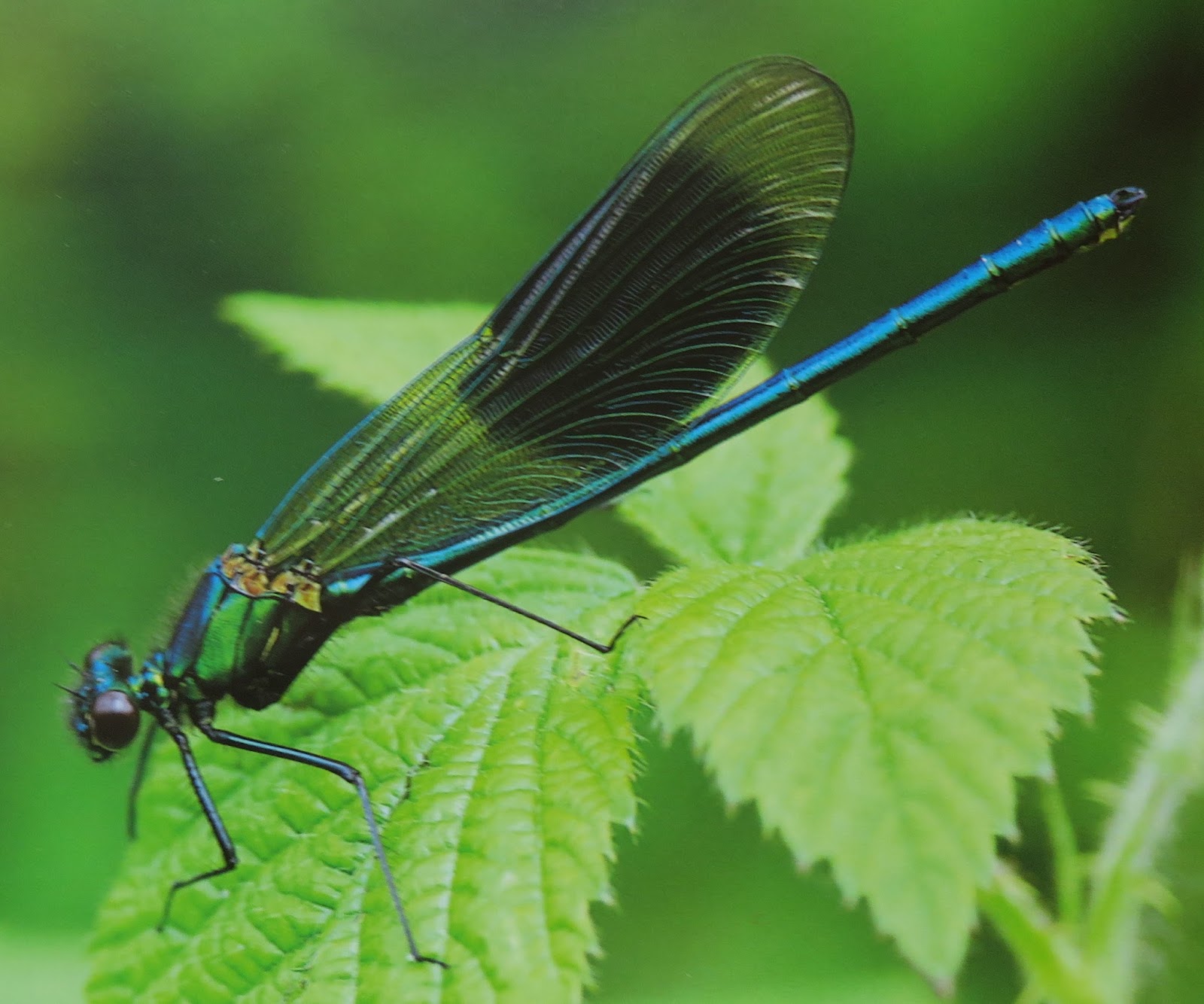
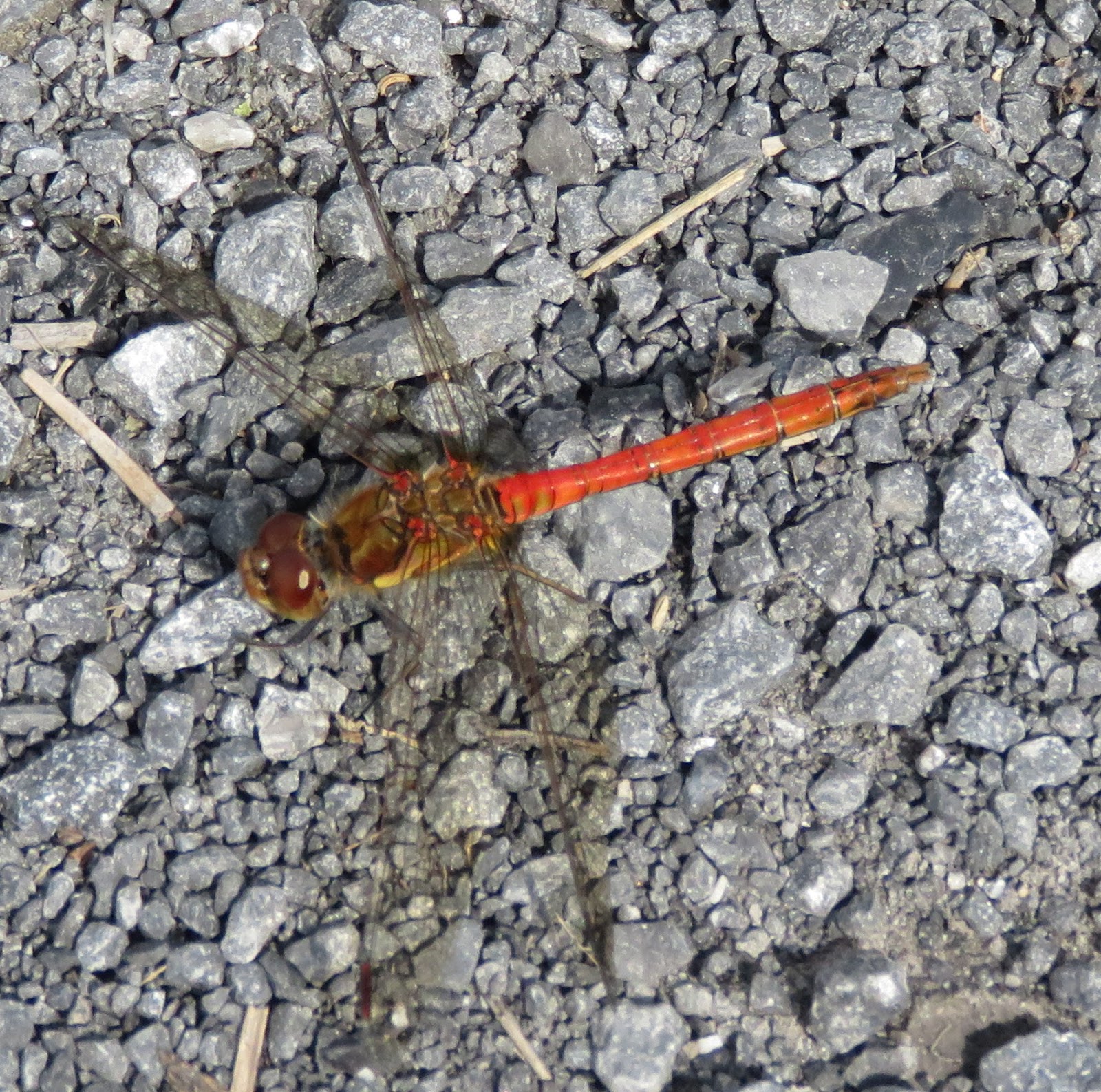
The weather was good, so we were able to enjoy a number of dragonflies and damselflies, with the Amber-winged Hawker (Aeshna grandis) patrolling the canal bank and both the Ruddy Darter (with its conspicuous red body) and the duller-looking Common Darter resting on the warm path. Aeshna grandis used to be called the Brown Hawker but is now commonly named for its distinctive glowing amber wings. The average length is 73mm and its average wingspan is 102mm. Unlike many insects, males and females look similar. It's probably the easiest dragonfly to watch as it doesn't pay much attention to people and flies in short glides over vegetation.


Looking at the grasses, the flowers and the hedge fruit, we observed the early autumn palate of the flora — the darker pink/purple colours replacing the brighter white/yellow colours of the summer. Examples on our walk included devil's-bit scabious and purple loosestrife (its name comes from the ancient belief that if the plant were placed on the necks of yoked oxen, it would prevent them from being quarrelsome!)


We noticed for the first time that bistort (Persicaria bistorta) is growing on the bank. This is a new development.

We discussed how different flower heads can be from one another, contrasting the pure white funnel-shaped bindweed with the domed, tightly-packed cluster flowerheads of devil's-bit scabious (the name comes from the short, bitten-off appearance of the rootstock). Devil's-bit scabious is a favourite of bees and butterflies and it's very encouraging to see that it's spreading along the canal.


We also talked again about the fact that buttercups, for instance, generally have five petals, while the dreaded ragwort, for example, has 13 petals. The smaller Fibonacci numbers (3,5,8,13,21) are common in the design of flowers. We might have a closer look at this subject next year.


Date: 27 August 2016 Time: 12-1
Attendance: 10 (including 4 children)


What we observed and talked about —

Bees: Bombus pascuorum
Birds: Blackbird, Swallow
Butterflies: Speckled Wood

Damselflies: Common Blue Damselfly
Dragonflies: Amber-winged Hawker, Common Darter, Ruddy Darter
Macro moths: August Thorn, Canary-shouldered Thorn, Lesser Yellow Underwing, Oblique Carpet
Micro moths: Ringed China-mark, Rush Veneer
Other insects: Common Green Grasshopper, hoverflies

Flowers: Bindweed, Bistort, Bramble, Bulrush, Cleavers, Common Knapweed, Common Nettle, Creeping Cinquefoil, Devil's-bit Scabious, Eyebright, Glaucous Sedge, Lady's Bedstraw, Marsh Woundwort,  Pineapple Weed, Purple Loosestrife, Red Bartsia, Red Clover, Ribwort Plantain, Silverweed, Taraxacum agg., Water Mint, Wild Carrot, Yellow Flag 
Grasses: Yorkshire Fog

Trees: Ash, Hawthorn, Willow

Friday, 26 August 2016

July expedition

It began to rain shortly before noon — so there was little possibility of seeing active butterflies and bees. Waterways Ireland's cutting of the banks has left very few flowers, so we abandoned our usual walk in favour of the high bank to the north of the canal (west of the bridge), which is beautifully floriferous. We began by examining some moths which had been trapped overnight.


Within 300 metres of the bridge, we saw a lot of orchids. For most members it was their first sight and scent of the fragrant orchid. Getting down and smelling it was compulsory! A really good magnifying glass enables people to make out details which cannot be seen by the naked eye; it can, actually, be essential for identification.


Two small flowers which we examined were Eyebright (Euphrasia officinalis) and Common Milkwort (Polygala vulgaris). We discussed how many plants are named for their real or supposed medicinal benefits. Eyebright, as its scientific name indicates, has traditionally been used in medicine, most often for eye complaints, as its English name indicates. The mottled purple and yellow marking on the flowers are like the colours of a black eye. Compresses and tinctures made from Eyebright were used to treat eye disorders. Selfheal (Prunella vulgaris) was until recently a popular wound herb, the leaves being used for cuts and bruises. The leaves taste mildly bitter and can be used as salad greens.


You might not know it from its name (but the saint's name is a hint) that Saint John's Wort is a very important source of herbal medicine, used in salves for burns and in anti-depressants. Both Milkwort and Polygala refer to a traditional belief that the little plant helps to increase milk yields in cattle. There are many willows along the high bank. The bark of this tree yields salicylic acid, a core ingredient of aspirin. Even this small sample highlights the importance of maintaining a wide variety of wild flowers as new medicinal uses of plants are being discovered all the time.

As well as viewing night-flying moths that had been trapped, we saw several day-flying moths along the high bank. The Beautiful China-mark (Nymphula nitidulata) is most often found by canals, rivers and lakes. Its larva feeds on Bur-reed and Yellow Water-lily. The Magpie (Abraxas grossulariata) is so called because of its general similarity to the colouring of the bird. Its larva feeds on Blackthorn, Hawthorn and similar trees.


Date: 23 July 2016 Time: 12-1
Attendance: 14 (including 6 children)
What we observed and talked about —

Butterflies: Meadow Brown, Ringlet, Small White, Speckled Wood
Damselflies: Common Blue Damselfly
Macro moths: Barred Straw, Burnished Brass, Common Emerald, Magpie, Gold Spangle
Micro moths: Beautiful China-mark, Orchard Ermine, Udea lutealis
Other insects: horseflies, hoverflies
Mammals: Pigmy Shrew
Flowers: Autumn Hawkbit, Black Medick, Bramble, Bur-reed, Bush Vetch, Common Bird's-foot Trefoil, Common Knapweed, Common Milkwort, Common Ragwort, Common Valerian, Dog-rose, Eyebright, Fragrant Orchid, Greater Bird's-foot Trefoil, Lady's Bedstraw, Ox-eye Daisy, Prickly Sowthistle, Red Clover, Saint John's Wort, Selfheal, Speedwell, Tormentil, Water Dock, Wild Carrot, Yarrow
Grasses: Common Quaking-grass, Common Sedge, Crested Dog's-tail, Red Fescue, Timothy Trees: Ash, Hawthorn, Wayfaring Tree
Other plants: Bracken, Horsetail

Monday, 15 August 2016

Large butterflies

Look out for the larger butterflies during the sunshine this week. There are Peacock butterflies and maybe Painted Lady butterflies. Here's a Red Admiral (Vanessa atalanta) seen on the high bank of the canal last week. Most of these Red Admirals are summer migrants.


If you happen to have Buddleia in your garden, it's a particular favourite of the Red Admiral.

Saturday, 23 July 2016

June expedition

Our June walk began with us examining some of the moths from the night's trapping. The Elephant Hawkmoth (Deilephila elpenor), one of the largest insects in the area, was much admired for its beautiful pink and green markings.


The Light Emerald (Campaea margaritata) is one of several green moths: somewhat surprisingly moths do not generally have the green colour of leaves and grass for camouflage.

We saw the first of the annual damselflies — the Common Blue Damselfly (Enallagma cyathigerum)— resplendent in its vivid blue. In the past week Grace and Annie, while surveying the flora of the canal bank, saw the Blue-tailed Damselfly (Ischnura elegans) and the Banded Jewelwing (Calopteryx splendens).


The young people asked about cuckoo spit that they observed on some of the plants. It's a white frothy liquid secreted by the nymphs of insects called Froghoppers (Cercopidae). The liquid protects the nymph from predation. It doesn't damage the plants.

Again the weather was poor and we saw very few butterflies and bees. By late June we should have been seeing good numbers of Ringlet and Meadow Brown butterflies (instead saw only Speckled Wood and Small Tortoiseshell). They have since appeared but in small numbers. Then again the grass has been cut short for about two metres on either side of the path and that has inevitably reduced the numbers.

Our main focus was on three of the four types of orchid which we see on the canal — the Common Spotted Orchid (Dactylorhiza fuchsii), the Pyramidal Orchid (Anacamptis pyramidalis) and the Common Twayblade (Listera ovata). The last of these, being pale yellow or green, is hard to see and takes some practice to find. The fourth orchid, the Fragrant Orchid (Gymnadenia conopsea), flowers later and will be admired on our July walk. All of these orchids are relatively rare in Ireland now and should never be picked.

During the month Gerry had the first sighting in 2016 of a Common Kingfisher (Alcedo atthis). This is very good news as these beautiful little birds were often seen before the two harsh winters of 2009 and 2010. It uses overhanging branches (1-2 metres above the water) to watch for fish, so you might like to eye up some suitable places along the canal bank. Although 60 per cent of its diet is fish, it also feeds on insects.

As well as the project undertaken by Grace and Annie on the canal bank, RuairĂ­ and Eoin have begun a quadrat study of grassland flora. many thanks to Eugene, who constructed a square-metre quadrat for us to use.

This fascinating study is being done in response to a request from the National Biodiversity Data Centre as part of its National Sampling Framework. We have completed two studies in Lesley’s garden and two on the high bank.

Two families have had some success in establishing wildflower meadows in their gardens even in this first year. We're collecting seed from the meadow in Lesley’s garden for distribution. Orchids appeared along the road in two areas of uncut grass, showing what may happen if you leave an uncut area (it's only likely to happen if the grass hasn't been improved and is effectively the same as the surrounding fields).

Waterways Ireland have given us small notices to put outside our gardens. We hope each family will use one to help raise awareness.

Date: 25 June 2016 Time: 12-1
Attendance: 13 (including 5 children)
What we observed and talked about —
Bee: Bombus pascuorum
 
Butterflies: Small Tortoiseshell, Speckled Wood
Damselflies: Common Blue Damselfly
Flowers: Arrowhead, Bramble, Common Bird's-foot Trefoil, Common Knapweed, Common Nettle, Common Plantain, Common Spotted Orchid, Common Twayblade, Creeping Buttercup, Dandelion, Dog-rose, Field Bindweed, Ox-eye Daisy, Prickly Sowthistle, Pyramidal Orchid, Red Clover, Silverweed, White Clover, Yellow Flag, Yellow Water-lily
Hoverflies: Helophilus sp.
 
Macro moths: Common Carpet, Elephant Hawkmoth, Green Carpet, Light Emerald

Micro moths: Barred Fruit-tree Tortrix, Brindled Plume
Trees: elder, hawthorn


Saturday, 16 July 2016

Hoverfly

Thanks to Eugene for this photograph of a hoverfly feeding on the pollen of an Ox-eye Daisy (Leucanthemum vulgare) taken on our monthly walk in June. Hoverflies are pollinators. They, unlike the majority of insects, can digest pollen. The surface coating of pollen is resistant to the digestive juices of most insects. The yellowness of a hoverfly can reflect the amount and type of pollen which it has eaten.


This is one of the Helophilus species of hoverflies. Alas this photograph doesn't reveal which of the varieties of Helophilus hoverflies this is. They are distinguishable by the markings on the hind leg. So we need to photograph both the body and the legs next time. These kind of hoverflies are most frequent in damp places and are often seen basking on waterside vegetation.

Wednesday, 6 July 2016

What may happen if you leave your grass uncut

This is what may happen if you leave your grass uncut from the beginning of May. Orchids popped up in the roadside verge outside two houses on our road. One of these patches has since been cut but we hope to be able to preserve these sites next summer.


These are Common Spotted Orchid (Dactylorhiza fuchsii), the same species we observed on our biodiversity walk at the end of June. The appearance of these flowers is only likely to happen where the grass has not been reseeded (if it is essentially unimproved grassland).

Sunday, 12 June 2016

25 June

In recent weeks you might have been hearing the male cuckoo calling in Baltrasna. He's most clearly heard in the early morning when there are fewer noises to compete with.

Our monthly expedition will take place on Saturday, 25 June at 12 noon. We hope to include a walk to an area of abundant orchid growth. These no longer grow on the south bank, due to the development of the towpath and the impact of mowing, but appear in a few places along the north bank.

On our walk along the canal we should see some butterflies that appear in midsummer, including the Meadow Brown and Ringlet.


Last month we saw the Spring Hawker (Hairy Dragonfly) patrolling its territory along the canal bank. We can expect to see an even larger dragonfly (Common Hawker or Brown Hawker) and possibly some colourful smaller dragonflies, such as the Ruddy Darter.

There should again also be an opportunity to view some moths before we set out on our walk. Several moths have been recorded for the first time in the area this month, including this Aristotelia ericinella that feeds on heather.